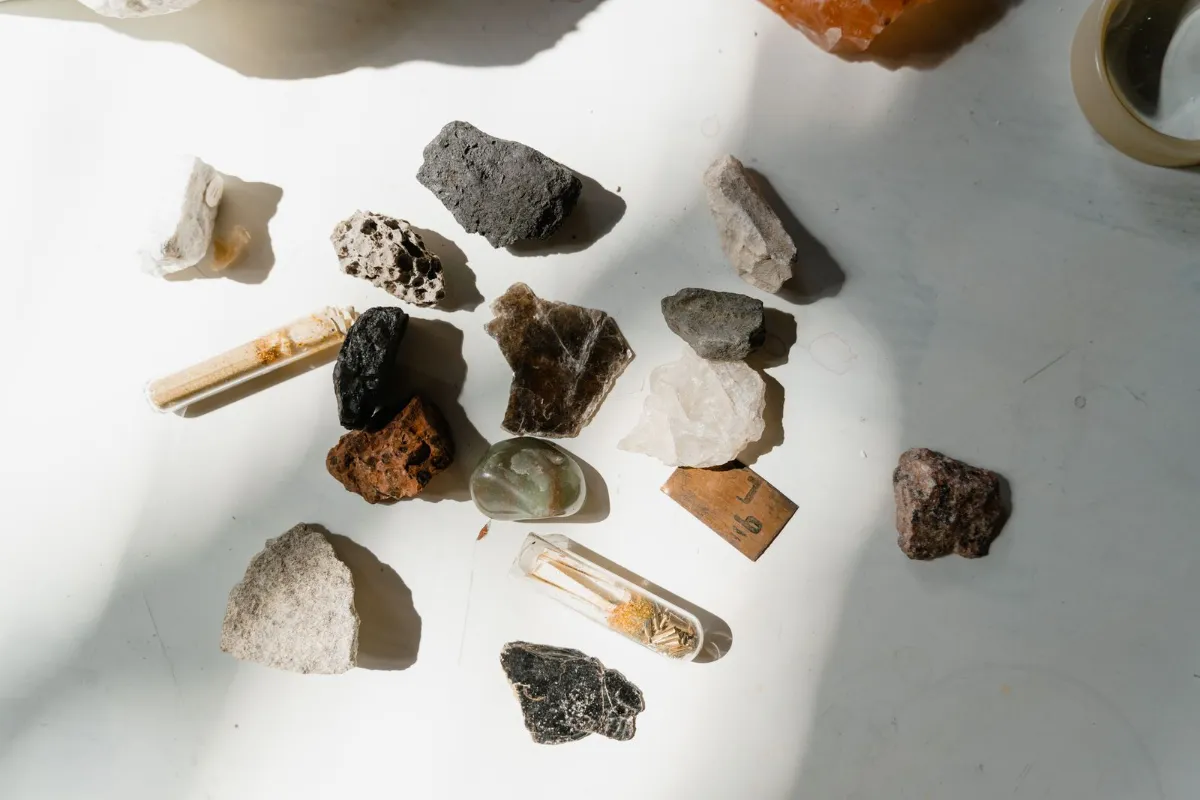
The most important rule in rock tumbling is simple: tumble stones of similar hardness together. Soft stones wear away, chip or bruise when they share a barrel with harder ones, and they leave mud that makes the whole batch look dull. Here’s how to sort your rocks before they go in.
The Mohs scale in a nutshell
Mineral hardness is measured on the Mohs scale from 1 (talc) to 10 (diamond). Each mineral scratches the ones below it. Quartz sits at 7, and that is the sweet spot for tumbling: hard enough to take a glassy polish, and soft enough for silicon carbide to shape.
| Hardness | Common tumbling materials | How they tumble |
|---|---|---|
| 7 | Agate, jasper, chalcedony, carnelian, quartz, amethyst | The easiest to tumble. Standard four-step schedule. |
| 6.5 to 7 | Petrified wood, unakite, many jades | Good results. Watch for cracks and soft spots. |
| 5.5 to 6 | Sodalite, many turquoise and glass | Gentler and shorter runs, with more filler. |
| 5 to 5.5 | Obsidian, Apache tears | Chip easily. Cushion well and run them on their own. |
| Below 5 | Fluorite, calcite, marble | Usually too soft or fragile for a rotary tumbler. |
Simple field tests
- Glass test: if a stone scratches a glass bottle, it is about 6 or harder, which is good for a standard batch.
- Steel test: a steel knife or nail is about 5.5. If the knife scratches the stone easily, it is too soft to mix with agate.
- Fingernail test: if your fingernail leaves a mark, the stone is far too soft for tumbling.
Hardness isn’t everything
- Cracks and fractures: a hard stone with cracks will break apart and scratch the rest of the load.
- Porous or grainy stones: they may never take a glassy shine, however long you run them.
- Brittle stones like obsidian: they are hard enough, but they chip on impact. Use plenty of filler.
How to sort a load
- Group your stones by type and test anything you are not sure about.
- Fill one batch with quartz-family stones (hardness 7).
- Save softer stones for their own batch, with a gentler schedule.
- Set aside anything cracked, crumbly or very soft.
Running softer stones? Read how to tumble softer stones, and try our six-pack grit kit for hard or soft rocks gives you more control at each step. For help choosing stones, read rock collecting and rock tumbling, or tell us what you have.