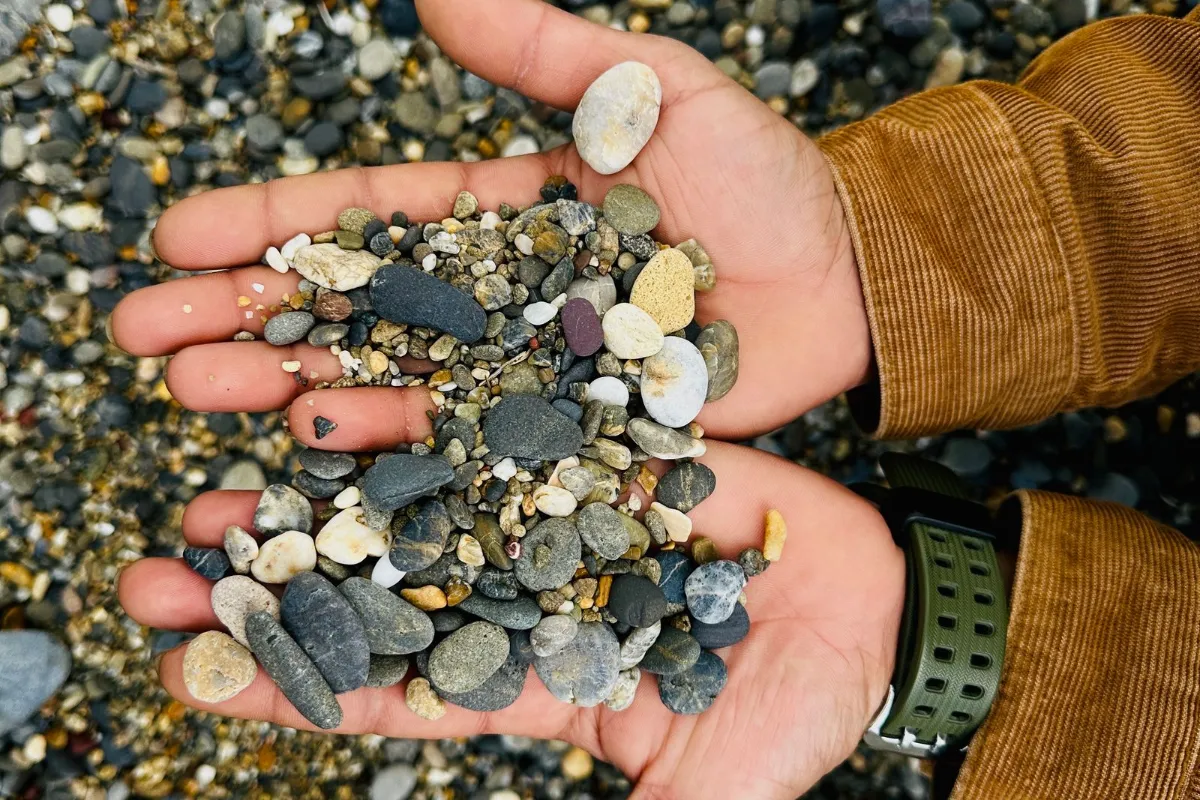
Rock collecting and rock tumbling go hand in hand. You find a rock you just know holds a beautiful pattern, and you know you can unlock it. Tumbling is a simple, inexpensive way to turn that find into something fantastic that lasts virtually forever. The trick is picking the right rocks to start with.
What makes a good tumbling rock
- Hardness: the quartz family, including agate, jasper, chalcedony, carnelian and petrified wood, polishes best. A good field test: if the stone scratches glass, it’s hard enough.
- Solid, not crumbly: skip stones that are cracked, flaky, chalky or full of holes. They break apart in the barrel and scratch everything else.
- Interesting color or pattern: wet the stone (a splash from a water bottle will do) to preview how it will look polished.
- The right size: mix sizes so small stones fill the gaps between larger ones. Skip stones so big they crowd the barrel.
Where to look
- Beaches and lakeshores: wave-tumbled pebbles are often already smooth and can start at the medium grit.
- Gravel bars and creek beds: look after a high-water event, when fresh stones are exposed.
- Desert washes: great for jasper, agate and petrified wood in the West.
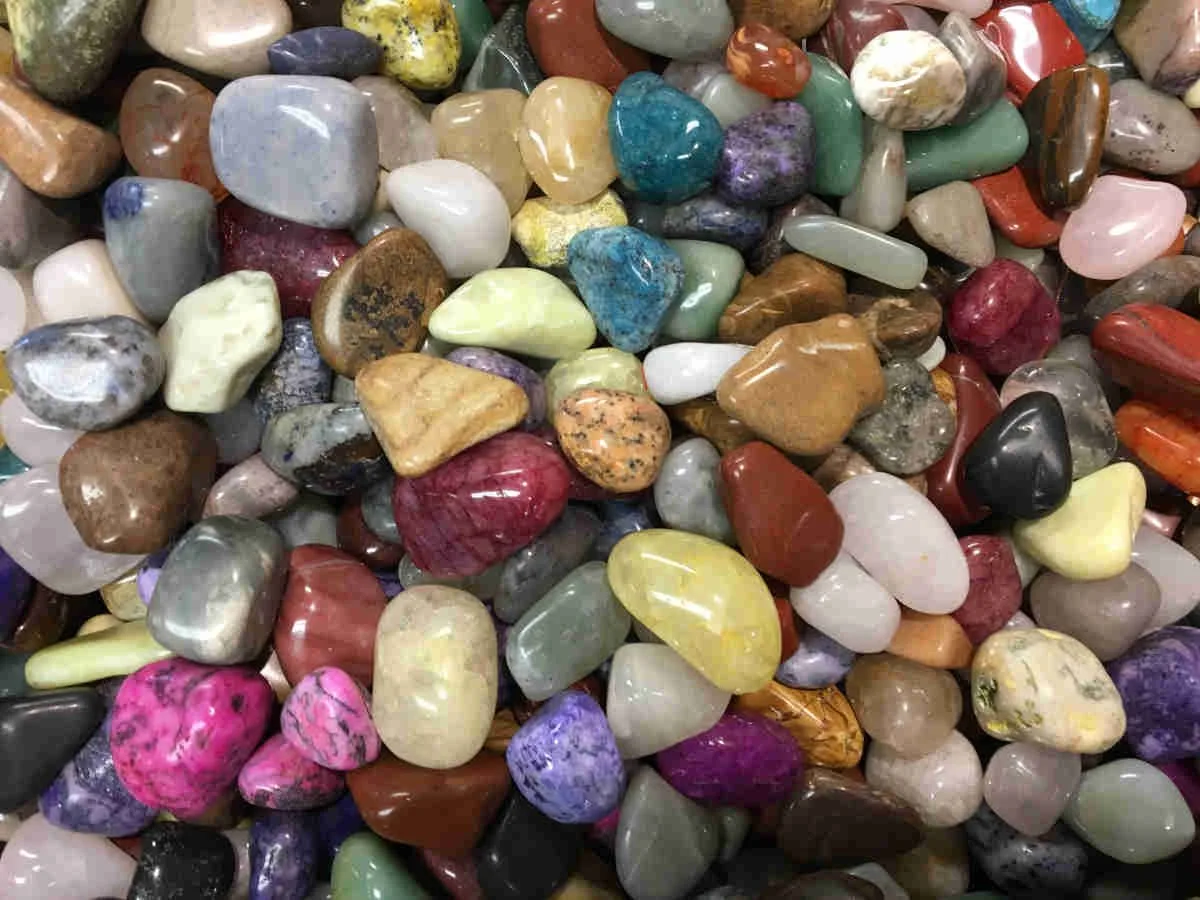
- Rock shops and shows: buying rough rock is a reliable way to fill a barrel with stones that will polish well.
Collect responsibly
Check the rules before you collect. Casual collecting for personal use is generally allowed on most Bureau of Land Management land, but not in national parks, and private land always needs the owner’s permission.
From pocket to polish
Back home, sort your finds by hardness, wash off the dirt, and set aside anything cracked. Then start with our four-step rotary guide. Most rough rock starts with coarse 60/90 grit, and our grit stages guide will help you choose where to begin.