Vibratory tumblers, explained
A vibratory tumbler shakes an open bowl so the whole load rubs against itself in a thick grit slurry. Stones keep their shape and finish in days instead of weeks. Here is how it works, how to load one, and how to keep it running.
Fast vibration, slow rolling
The bowl shakes
A motor with an offset weight vibrates the bowl hundreds of times a minute. The load rolls slowly around the bowl as one mass instead of tumbling.
The slurry does the work
There is only enough water to turn the grit into a thick slurry that coats every stone. Stones grind against each other through that coating.
The shape stays
Stones keep their shape and lose very little size. Start with pieces that are already shaped or smooth, since a vibratory won’t round off rough rock.
What to look for
A vibratory finishes faster than a rotary but needs more attention. These details help.
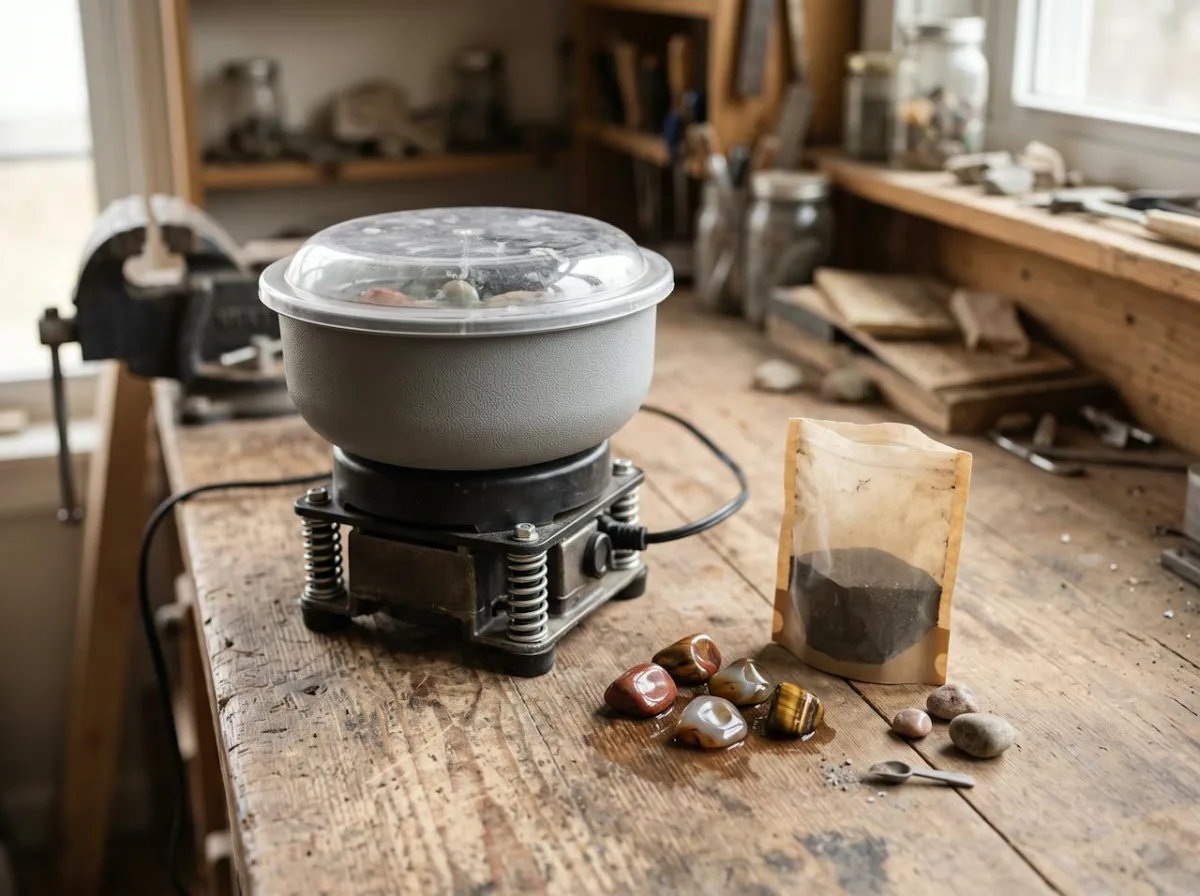
A 3 to 5 lb rated load is a good first size, and it matches our vibratory kit.
A removable bowl makes it much easier to clean between steps.
A lid that seals well slows evaporation, so the slurry stays wet longer.
Choose a motor built for continuous running, since each step runs one to three days.
Three steps, about 1 oz each
Our vibratory kit uses three steps. Amounts are for a standard 3 to 5 lb load, with enough water to make a creamy slurry.
1 · Medium/fine
2 · Pre-polish
3 · Polish
Filler
Keep the slurry right
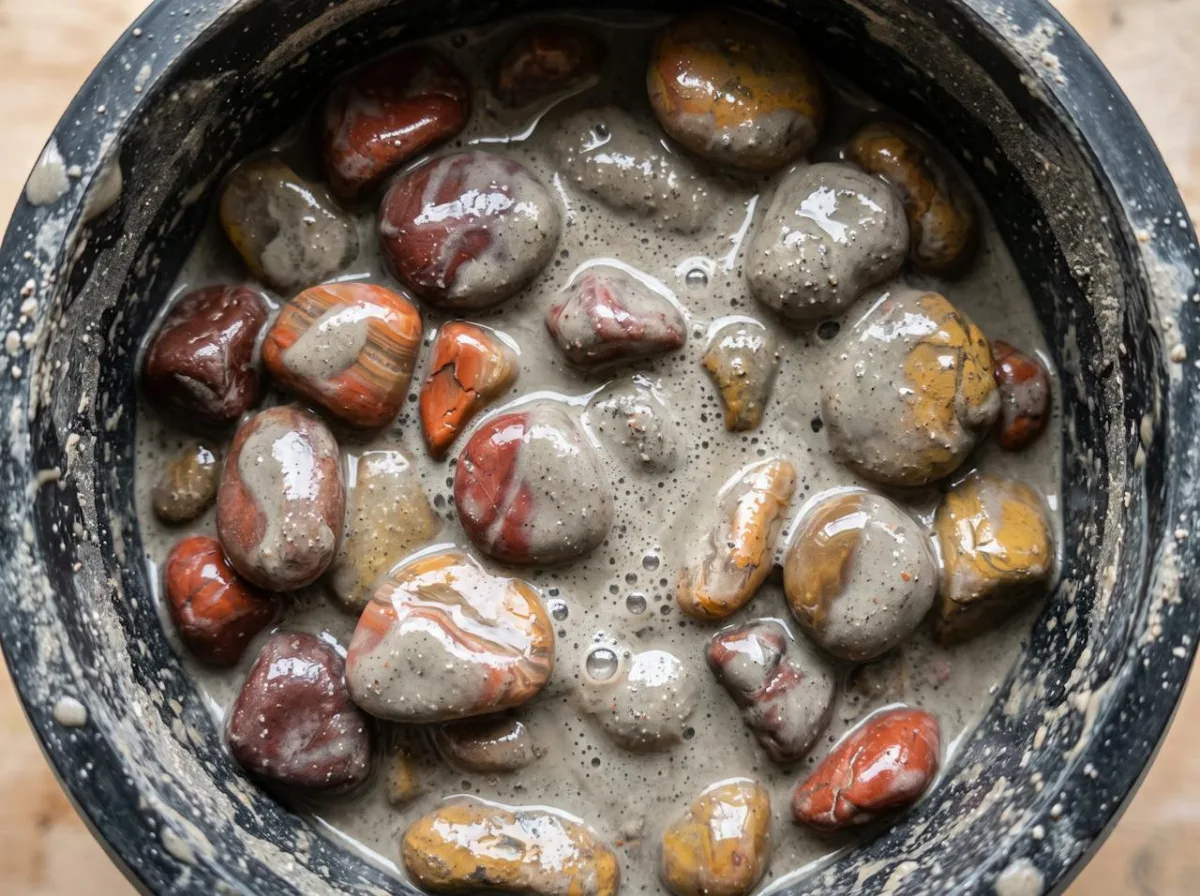
Check the bowl two or three times a day. Add a little water when the slurry thickens or the load slows down.
Too much water lets grit settle and wear the bottom of the bowl. Pour off any standing water.
If the slurry stays thick after adding water, rinse everything and run that step again with fresh grit.
Scrub the bowl and lid between steps. A single grain of coarser grit can haze a polished load.
Never pour slurry down the drain
It settles in pipes and sets like concrete. Let it dry in a bucket and throw it out with household trash. More on used grit and slurry.
Many people use both
Rotary first
Use a rotary for the coarse step to round off rough rock. It takes about a week and does the heavy shaping.
Vibratory to finish
Move shaped stones to a vibratory for the finer steps. It finishes in days and keeps the shape you worked for. Compare the two tumblers.
Not sure what your tumbler needs?
Send us your tumbler model and bowl size. We’ll tell you exactly how much grit to use for each step.