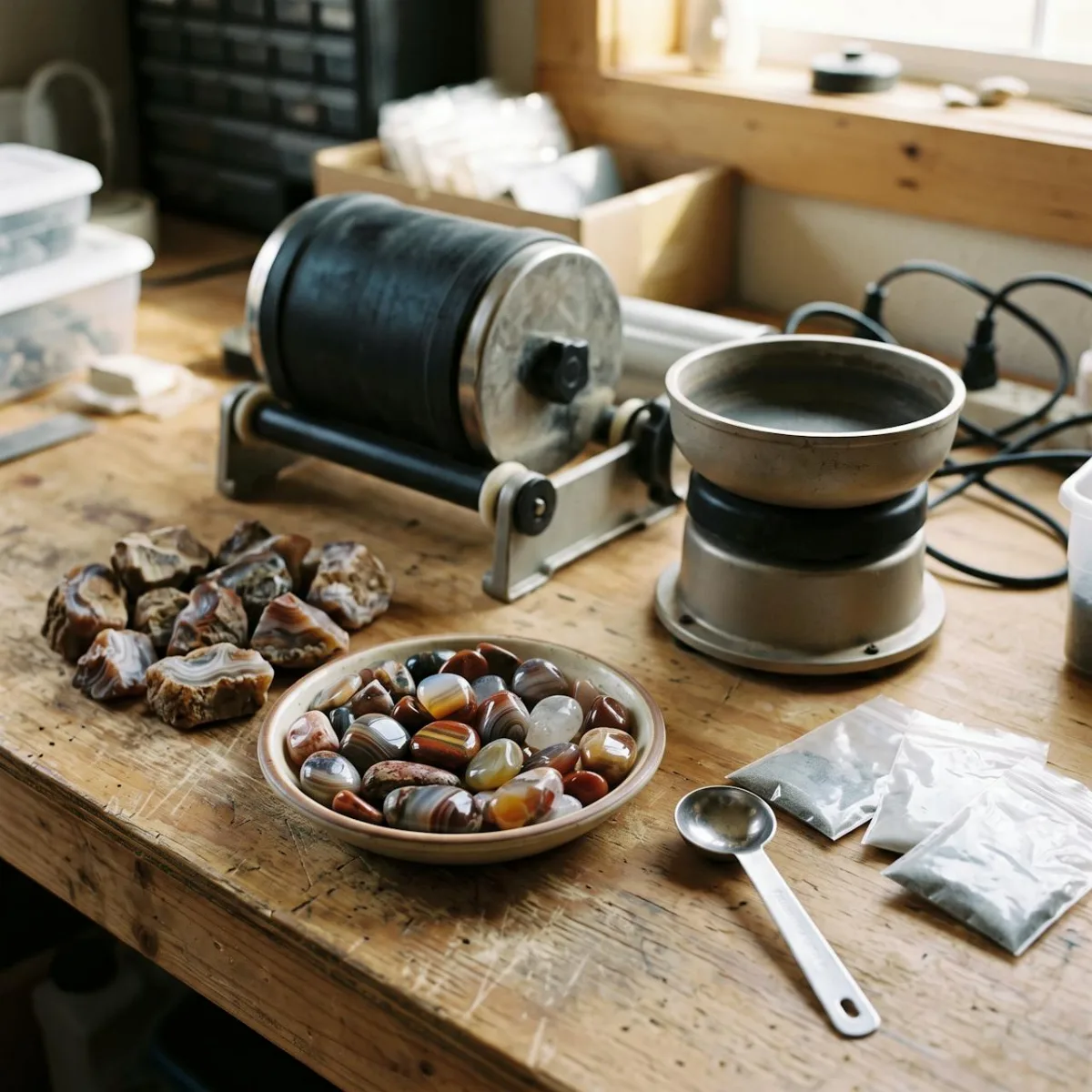
Rotary and vibratory tumblers both turn rough stones into polished ones, but they work in very different ways. A vibratory tumbler takes less grit and less time. Still, if we were stranded on a desert island and could only take one, we’d take a rotary tumbler for how much it can do. Here’s how to choose.
How they work
- Rotary: a sealed barrel turns slowly on rollers, so the stones slide over each other in grit and water, much like pebbles in a riverbed. This rounds and shapes rough rock.
- Vibratory: an open bowl shakes hundreds of times a minute, and the load rubs against itself in a thick grit slurry. The stones keep their shape and lose very little size.
Side by side
- Best for: rotary for rough, angular rock and beginners; vibratory for stones that are already shaped, such as cabochons, slabs, preformed pieces and metal parts.
- Time: rotary about 7 days per step, about 4 weeks in total; vibratory 1 to 3 days per step, about 1 to 2 weeks.
- Grit: rotary about 2 tablespoons per pound of rock per step; vibratory about 1 ounce per step for a 3 to 5 lb load.
- Shape: rotary rounds stones off and makes them smaller; vibratory keeps the original shape.
- Attention: rotary needs a check every few days; vibratory needs a check two or three times a day to keep the slurry right.
- Noise: both are best in a garage, basement or workshop.
Why many people use both
Use a rotary tumbler for the coarse step to do the heavy shaping, then move the shaped stones to a vibratory tumbler for the finer steps. You get the rotary’s shaping and the vibratory’s speed, and the finish keeps the shape you worked for.
Our pick for a first tumbler
If you are starting out with rough rock you have collected, start with a rotary tumbler. A 3 lb barrel is a good first size, and a rubber barrel runs quieter. It’s the most forgiving way to learn the process.
Read our rotary tumbler guide and vibratory tumbler guide for the details, and pick up a vibratory grit kit or a rotary grit kit to match.