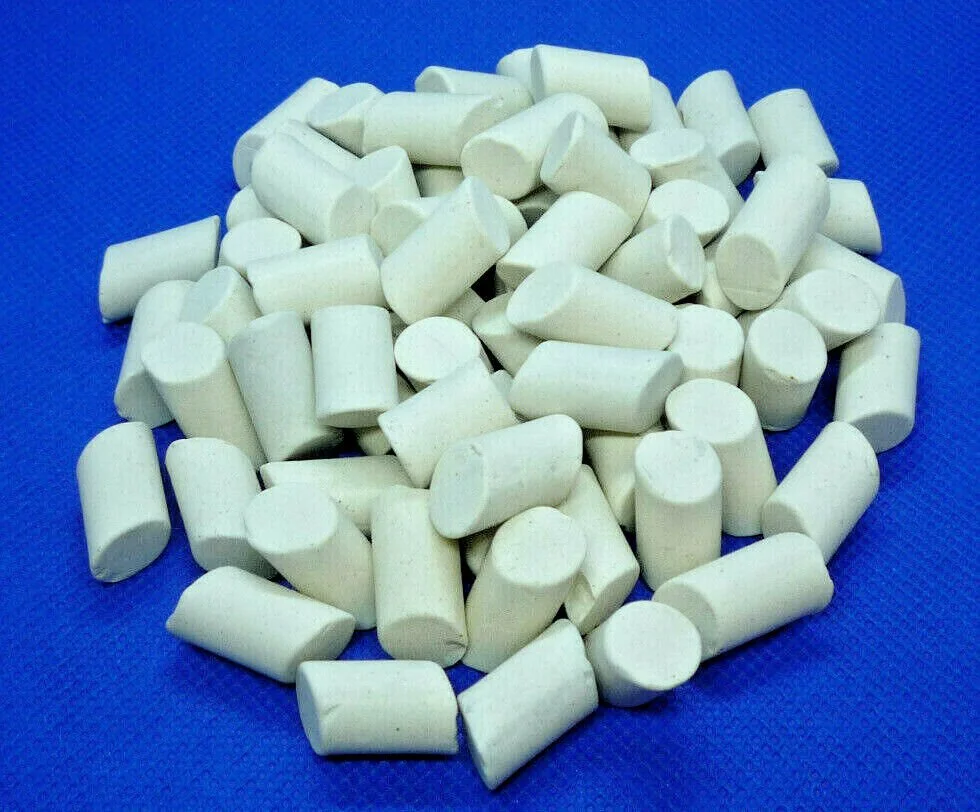
Filler is anything you add to the barrel besides rock. It solves two of the most common tumbling problems: a load that is too light, and stones that chip as they get smoother. The two most common fillers are ceramic cylinders and plastic pellets, and they do different jobs.
Why use filler at all?
- A full barrel tumbles properly: a rotary barrel needs to be two-thirds to three-quarters full. If it’s emptier, stones crash into each other instead of rolling.
- Cushioning: filler keeps stones apart so they don’t bruise or chip.
- Better grinding: small pieces carry grit into crevices and around odd shapes.
- Small batches: you can tumble a handful of special stones without waiting for a full load.
Ceramic cylinders
Ceramic filler is hard and heavy, a lot like stone. It helps carry grit into hollows, keeps the load moving evenly, and makes up weight when you are short on rock. It wears down slowly and can be reused for many batches.
- Best for: the coarse and medium steps, and any step where you need to make up the load.
- Sizes: small cylinders for small stones and tight crevices, large cylinders for bigger loads.
Plastic pellets
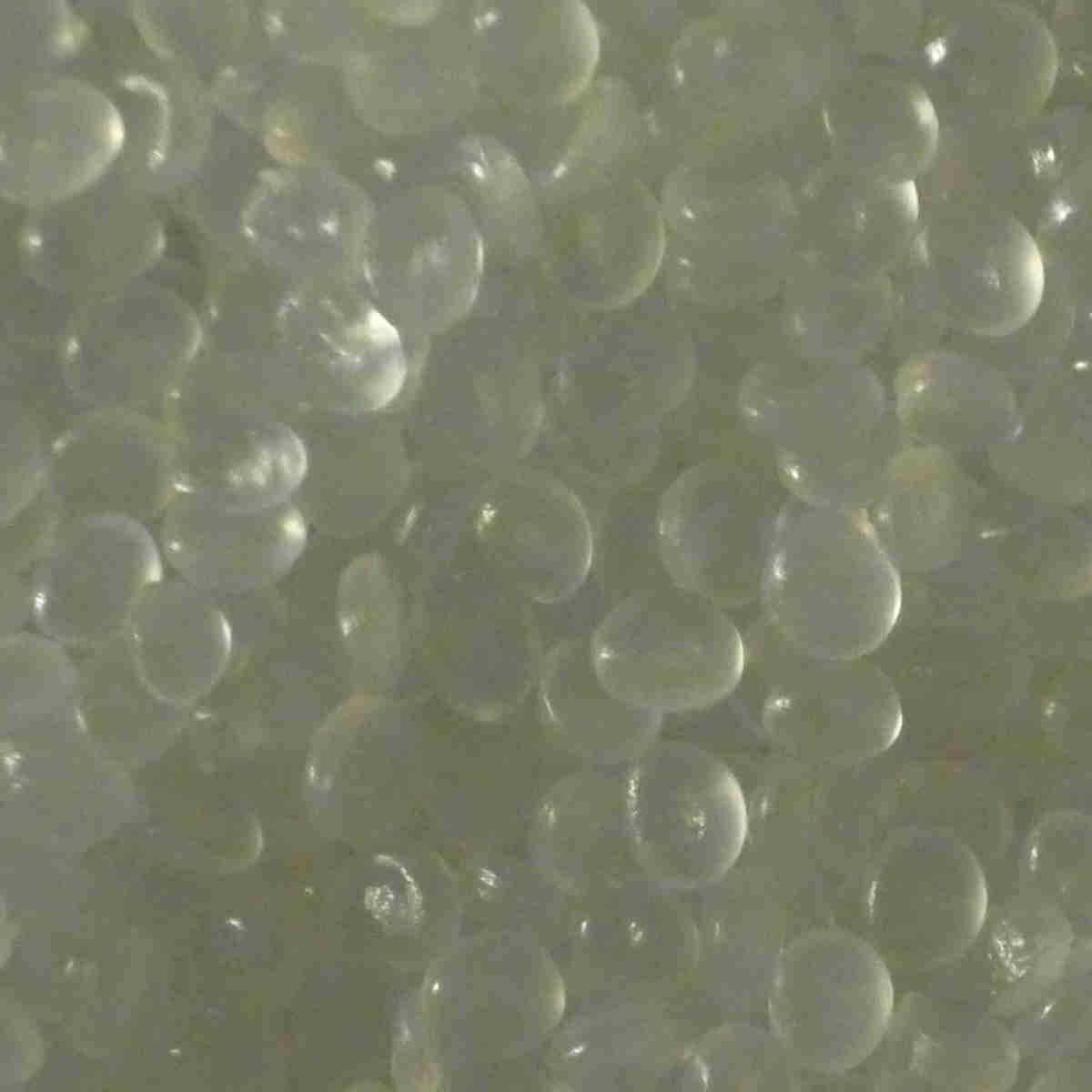
Plastic pellets are light and soft. They don’t add much grinding power, but they cushion the stones and thicken the slurry, which matters most in the final steps, when stones are smooth and chip easily.
- Best for: the pre-polish and polish steps, and brittle stones like obsidian and glass in any step.
- How much: about a quarter of the load is a good starting point in the polish steps. Add more for fragile stones.
- Reusable: rinse plastic pellets well and keep using them.
Keep filler clean
Filler picks up grit just like stones do. Rinse it thoroughly between steps, and keep a separate set of pellets just for the polish step. One grain of coarse grit hiding in a pellet can haze a whole batch. Read how to keep that underwater look for more on avoiding haze.
Quick guide
- Coarse and medium: ceramic to make up weight, if needed.
- Pre-polish and polish: plastic pellets for cushioning.
- Glass, obsidian and soft stones: plastic pellets in every step.
- Short on rock: ceramic first, then pellets, to reach two-thirds to three-quarters full.
Find both in our tumbler accessories, and see the four-step rotary guide for where they fit in the schedule.