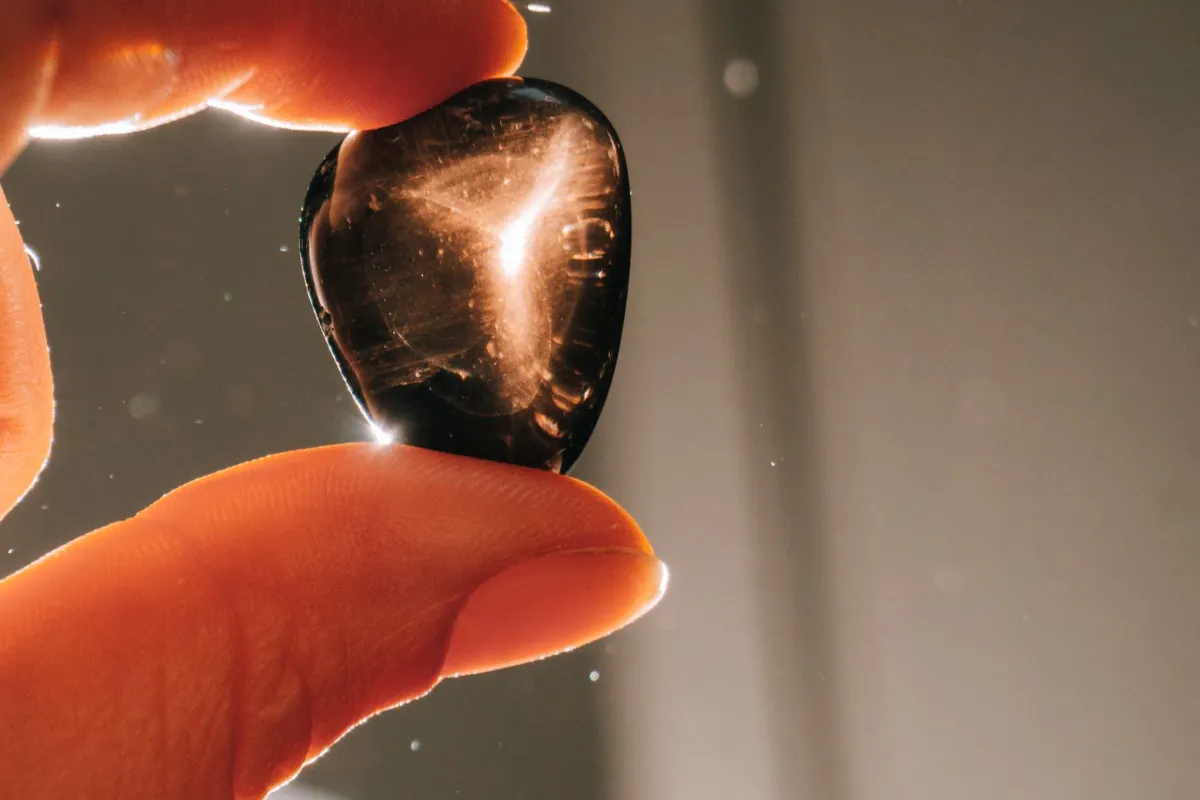
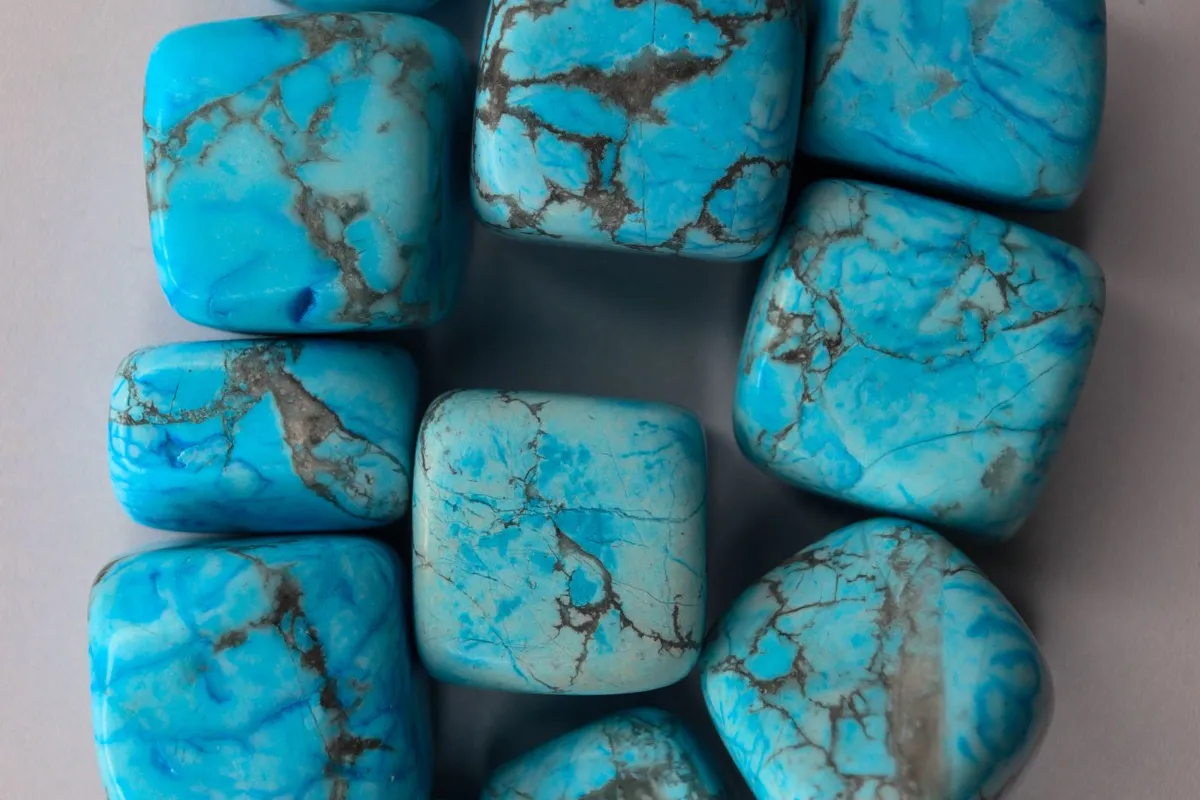
Agate and jasper are forgiving, but some of the most striking stones are softer or more brittle: glossy black obsidian, sky-blue turquoise, deep blue sodalite. They can take a beautiful finish in a rotary tumbler, as long as you slow down and cushion them well.
What counts as a softer stone
Anything below about 6 on the Mohs scale wears much faster than quartz-family stones, which sit at 7. See our hardness guide for the full table.
- Obsidian and Apache tears (5 to 5.5): volcanic glass. It polishes to a mirror shine, but chips easily, and fresh edges are razor sharp.
- Turquoise (5 to 6): often porous. Much of what is sold is stabilized or treated, so ask your seller what you have.
- Sodalite (5.5 to 6): takes a good polish but can split along natural planes.
- Very soft stones such as fluorite, calcite and malachite: usually better polished by hand than in a tumbler.
Run them on their own
Never mix softer stones with agate or quartz. Give them their own batch, filled two-thirds to three-quarters full, using plastic pellets to make up the load.
Adjust the schedule
- Start as fine as you can. If the stones are already a shape you like, skip the coarse step and start at 120/220. If they need shaping, run coarse grit for only a few days and check often.
- Shorten every step. Check after two or three days instead of waiting a full week. Softer stones get there faster and lose size quickly.
- Cushion every step. Use plenty of plastic pellets from the very first step, not just in the polish.
- Take the pre-polish in two stages. A 500 pre-polish followed by a finer aluminum oxide pre-polish gives softer stones a smoother path to the final polish.
- Finish with aluminum oxide polish and pellets, then check dry stones in good light.
Our six-pack kit for hard or soft rocks includes 46/70 coarse grit, 500 pre-polish, a 1000 aluminum oxide pre-polish and a fine aluminum oxide polish, so you have the extra steps on hand.
Stone-by-stone tips
- Obsidian: wear gloves when sorting rough pieces, and keep the barrel full and well cushioned. Expect it to finish in fewer days than agate.
- Turquoise: rinse it very thoroughly between steps, since porous stones can hold grit. Some pieces will take a soft, waxy shine rather than a glassy one.
- Sodalite: check for cracks between steps and pull any that start to split.
Getting chips or bruises anyway? Read chipped, bruised or broken stones. For the standard schedule, see the four-step rotary guide.